




Enabling Ticketmaster’s first Pricing AI/ML roadmap
I led the product work for a Databricks data mart that unified fragmented sources and made historical price-change analysis possible.
- Historical price changes
- Newly available for analysis

AI Product Manager & Builder
My work sits at the intersection of product and engineering. I have nearly a decade of experience in early stage startups, and my work spans data, AI/ML, LLMs, Agents, platform, and developer tools.

I build and operate a production agent platform for sourcing and outbound work.
I built two AI products end to end using coding agents: Calx for agent reliability and Versed for job applications and career intelligence. Development is paused; I continue to use Versed components in my job search.
I owned pricing data science and platform infrastructure for Ticketmaster’s live-event pricing ecosystem, partnering with engineering, operations, analytics, and client support.
I was the first product manager, employee #34, for the open-source Python data-quality framework.
I joined early-stage Balto as its first solutions engineer, employee #33, and served as both a Product Manager and a Solutions Engineer for its real-time AI coaching software for contact centers.
I was employee #1 at Clever Real Estate, a real-estate brokerage matching platform.
I joined as an Account Executive in 2015 and was promoted to Lead Account Executive in 2016.
Data infrastructure, developer adoption, and production agents.
I led the product work for a Databricks data mart that unified fragmented sources and made historical price-change analysis possible.
I traced churn to production deployment, then led deployment-template and v3 migration work with engineering, docs, and developer relations.
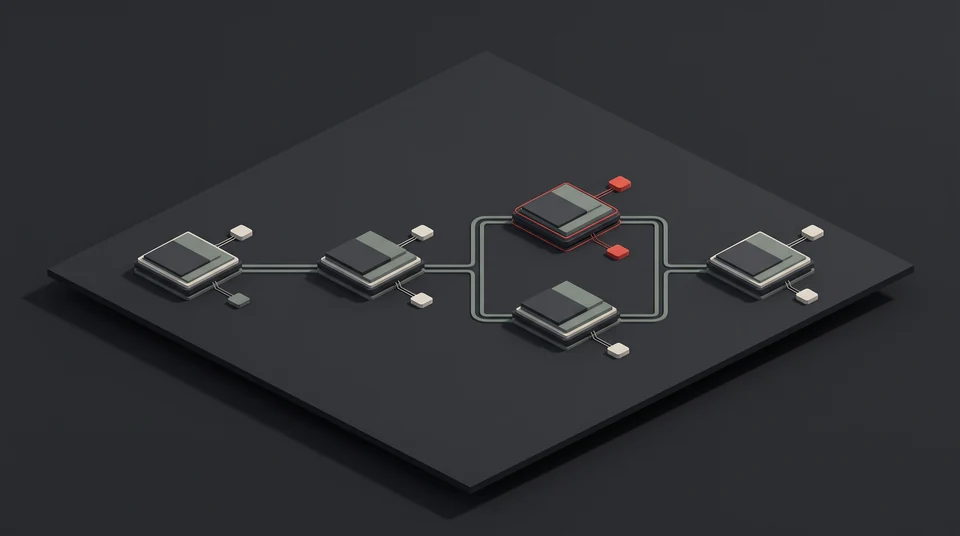
At TrueSeek, I built production agents that source and enrich candidates and run outbound campaigns behind recruiter approval gates.
The agent interprets the recruiter's request and prepares a proposal for sourcing or outbound work. Preparing a proposal does not authorize execution.
The recruiter inspects the proposed work and approves it before the application can proceed.
Application code executes the approved work and reports what happened. Execution uses validated inputs and idempotency keys to prevent repeated requests from duplicating the action.
Product and engineering, end to end.
I built a workspace and agent runtime that turn recurring corrections into enforceable rules across sessions.
Keep the correction beside the work
Context
Agent attempts a file change before orientation.
Correction
Correction captured: read the briefing before making changes.
I built job matching and résumé tools, then made the link between candidate evidence and employer requirements the main interaction.
Explore the tools and methods I work with.
See how the pieces fit together.
Working surface
Local execution
Services and inference
Component responsibilities
The Svelte and TypeScript workspace runs inside Tauri. It keeps sessions, corrections, and rule-promotion decisions in one interface.
Svelte / TypeScript
The Rust shell connects Bench to the local Python runtime and delivers runtime events to the interface.
Tauri / Rust
The Python runtime manages sessions, middleware, tool availability, model routing, and a local rule cache. Owning execution lets Calx withhold tools or check prerequisites when the agent acts.
Python / LangChain / LangGraph
Python REST services manage the correction lifecycle, rule compilation, validation, signing, and distribution. Compilation runs outside the desktop bundle.
Python
PostgreSQL stores correction and rule lifecycle records. Tether caches the rule material used during local execution.
PostgreSQL
With bring-your-own-key routing, Tether sends inference requests directly to the selected model provider.
Managed inference passes through the cloud service, making that service part of the inference data path.
The interface invokes the Tauri shell and receives runtime events through its native bridge.
A local WebSocket carries commands and events between the Rust shell and Python runtime.
REST supports lifecycle operations and artifact retrieval; an update stream announces rule changes.
The service stores lifecycle records in PostgreSQL.
BYOK inference routes directly to the model provider.
Managed inference routes through the cloud proxy.
Bench Tauri shellNative bridge
The interface invokes the Tauri shell and receives runtime events through its native bridge.
Tauri shell TetherLocal WebSocket
A local WebSocket carries commands and events between the Rust shell and Python runtime.
Tether Cloud servicesREST + update stream
REST supports lifecycle operations and artifact retrieval; an update stream announces rule changes.
Cloud services PostgreSQLPersistent records
The service stores lifecycle records in PostgreSQL.
Tether Direct inferenceProvider API
BYOK inference routes directly to the model provider.
Tether Managed inferenceManaged request
Managed inference routes through the cloud proxy.
Experience and identity
Application services
Data and background work
Component responsibilities
The Next.js interface presents structured translation and agent cards. It replaced the earlier Soaria product interface.
Next.js / React / TypeScript
Supabase supplies user identity. The backend validates authentication and checks session ownership before acting.
Supabase
FastAPI handles translations, authenticated agent turns, session claiming, feedback, and server-sent events.
FastAPI / Python
A shared LiteLLM layer handles model calls, tracks usage, and checks budgets across interactive requests and background jobs.
LiteLLM
PostgreSQL stores application records and conversation state. pgvector narrows the job candidates sent for more expensive model scoring.
PostgreSQL / pgvector
Scheduled jobs ingest listings, create embeddings, and rank matches. They use the same data layer as interactive requests.
Prefect / Python
The interface obtains authenticated user identity through Supabase.
HTTP requests initiate work and SSE delivers structured events and commentary.
The backend validates the supplied identity before authenticated operations.
Application services use the shared gateway to interpret and generate content.
Application services persist records and enforce ownership checks around sessions.
Background jobs write and query the data used by matching and translation.
Jobs use model capabilities as part of embedding and ranking pipelines.
Next.js interface Supabase AuthAuthentication
The interface obtains authenticated user identity through Supabase.
Next.js interface FastAPIHTTP + SSE
HTTP requests initiate work and SSE delivers structured events and commentary.
Supabase Auth FastAPIJWT validation
The backend validates the supplied identity before authenticated operations.
FastAPI Model gatewayStructured model calls
Application services use the shared gateway to interpret and generate content.
FastAPI PostgreSQL + pgvectorQueries and writes
Application services persist records and enforce ownership checks around sessions.
Prefect jobs PostgreSQL + pgvectorScheduled data preparation
Background jobs write and query the data used by matching and translation.
Prefect jobs Model gatewayEmbedding and scoring calls
Jobs use model capabilities as part of embedding and ranking pipelines.
Interfaces, services, data, and identity.
Typed Python APIs and backend services.
Official websitePython tools and services using the Model Context Protocol.
Official websiteModel Context Protocol connections between AI applications, tools, and data.
Official websiteReact applications and web interfaces.
Official websiteDelegated authorization with explicit access scopes.
Relational data modeling and persistence.
Official websiteData validation and typed Python models.
Official websiteBackend services, agent tooling, and data workflows.
Official websiteOne sign-in experience across connected applications.
Utility-based interface styling.
Official websiteFrameworks for discovery, prioritization, and delivery.
Iterative delivery informed by feedback and changing needs.
Make work visible and manage flow through the system.
Build, measure, and learn to test product assumptions.
Coordinate delivery and priorities across multiple teams.
Focused sprints with regular inspection and adaptation.
Shape a bounded problem before committing a delivery cycle.
Ways to define behavior, structure systems, and verify the result.
Encapsulate state and behavior behind explicit interfaces.
Use an explicit specification to guide implementation and checks.
Define an expected behavior in a test, implement it, then refactor.
Experience across the three major cloud platforms.
Amazon Web Services cloud platform.
Official websiteMicrosoft Azure cloud platform.
Official websiteGoogle Cloud infrastructure and services.
Official websiteThe broader toolkit: AI, data, design, infrastructure, and collaboration.
Agent application framework and runtime.
Official websiteModel deployment and inference infrastructure.
Official websiteProgrammatic agent workflows using Claude’s agent runtime.
Official websiteAgent-assisted software development with Claude.
Official websiteClaude in the desktop application.
Official websiteAnalytical queries over large datasets.
Official websiteAgent-assisted implementation, review, and development.
Official websiteTeam documentation and shared knowledge.
Official websiteAI-assisted editing and development.
Official websiteData engineering, analytics, and machine learning.
Official websiteContainerized development and deployment.
Official websiteAI voice and audio tools.
Official websiteInterface design and collaborative prototyping.
Official websiteAI assistance within the development workflow.
Official websiteData validation through explicit expectations.
Official websiteModels, datasets, and tools for machine learning.
Official websiteIntegrated development environments for software engineering.
Official websiteIssue tracking and delivery planning.
Official websiteInteractive notebooks for code, data, and analysis.
Official websiteFrameworks and integrations for model-powered applications.
Official websiteTracing, evaluation, and observability for LLM applications.
Official websiteTracing and evaluation for agent and LLM applications.
Official websiteIssue tracking and product delivery.
Official websiteAsynchronous video walkthroughs and communication.
Official websiteAI-assisted application prototyping.
Official websiteTeam communication and collaboration.
Official websiteCloud compute for Python and AI workloads.
Official websiteA shared API for accessing model providers.
Official websiteOrchestration for data pipelines and background workflows.
Official websiteApplication deployment and infrastructure.
Official websiteApplication hosting and deployment.
Official websiteAn integrated environment for building and running applications.
Official websiteTeam communication and collaborative workflows.
Official websitePostgreSQL-backed application services and authentication.
Official websiteEmail workflows and inbox management.
Official websiteTyped model outputs for software workflows.
Official websiteInterface and application generation from Vercel.
Official websiteWeb application previews and deployment.
Official websiteTerminal and agent-assisted development workflows.
Official websiteAI-assisted editing and development.
Official websiteCOO at TrueSeek
Was my client at TrueSeek
Spencer is a gifted Product & GTM expert with AI and Agentic software platforms, with the capability to not only gather requirements, but also build and deploy functioning SaaS solutions as an independent operator. He built and deployed an agent which performs critical functions of our business at TrueSeek which is used for business development, candidate engagement, connecting critical SaaS systems together, and is fully functional for users to interact with easily within MS Teams.
Beyond this, I’ve had the privilege of collaborating with Spencer on several entrepreneurial pursuits and have great respect for his intuition and creative vision for enterprise software applications (B2B and B2C). He is one of the most technical Product Leaders I’ve met, understanding back-end architecture, databases, cloud deployment, and solutions engineering at the level which exceeds the vast majority in his field. Spencer was an early adopter of AI platforms and has published respected articles and has made novel discoveries within the field, laying the ground-work for areas of research and focus in the field today.
I’d highly recommend him for a full-time or project based role, as Spencer will come through quickly with immediate contributions to any team or business.
CEO at TrueSeek
Was my client at TrueSeek
Spencer is highly intelligent, resourceful and solution oriented. A talented engineer who excels at developing innovative solutions, overcoming technical challenges and turning complex ideas into functional products. His ability to think critically, adapt quickly and solve problems make him a valuable asset to any team.
Chief Product Officer, Linkedin Ecosystem
Managed me directly at Shift
Spencer was always willing to go the extra mile - work weekends, late night and out of his way to help customers. He often would volunteer to step up and work weekends and reschedule his day to help out with a shift. His numbers were always good and he's a a pleasure to work with - but what makes him truly special is his willingness to go the extra mile.
Senior Technical Product Manager at Ticketmaster
Worked together on the same team
Spencer is an incredibly bright colleague with an undoubtedly even brighter future ahead. One of the most impressive things I first noticed was the sheer magnitude of literature Spencer has consumed. Business, Product, Development, ML - after a while I lost track of all the book and podcast recommendations. That wealth of knowledge comes through in Spencer's ability to both grasp and tie together long term vision, immediate business needs, and the granular day-to-day runnings of agile development. All of this combined with EQ to match, make people like Spencer a power house and an invaluable asset to any team.
Program Manager at Ticketmaster
Worked together on the same team
I wholeheartedly recommend Spencer as a passionate and forward-thinking partner.
I had the pleasure of working with Spencer during his time as a Product Manager in Ticketmaster.
Spencer stands out as an engaged and proactive leader. He consistently thinks several steps ahead in the product lifecycle and always brings bold, innovative ideas to the table. What I particularly admire is his determination to defend his vision with conviction. While this strong stance can sometimes spark debates, I see it as one of his greatest strengths: Spencer is not afraid to challenge the status quo in the pursuit of excellence.
On a personnal side, Spencer is full of life — always cheerful, engaging and passionate, especially when it comes to his music production. His enthusiasm is truly contagious.
I am confident that any team working with Spencer will benefit from his energy, creativity, and unwavering commitment, and I have no doubt Spencer will continue to make a lasting impact wherever he goes.
Director of Product Design at Pager Duty
Worked together at Great Expectations
It was a pleasure working with Spencer at Great Expectations. Spencer is someone who can move fluidly from product thinking to marketing and message. When it comes to understanding the user, Spencer is an enthusiastic parter in performing user research, synthesizing findings, and advocating desired outcomes.
Business Operations Specialist at Bloomberg Group
Worked together at Clever Real Estate
Spencer is a hard-working, curious, and status-quo challenging individual that I had the pleasure to work with and learn from at Clever Real Estate. Spencer was a dominant voice in implementing strategy and offering feedback when identifying ways the sales team could grow as a collective. He is open to learning from peers and professional resources, increasing his relevant skill and knowledge-base, and share his thoughts on how to grow the group IQ and EQ. Spencer will be an asset to an organization that challenges him to come up with novel solutions to help improve processes and grow the business.
Business Development Representative
Worked together at Clever Real Estate
I worked with Spencer as an Account Executive during his time at Clever. When working with Spencer I found that his friendly demeanor made collaborating on group projects easy and enjoyable. Spencer cares about his teammates and will take extra steps to let you know he appreciates your contributions. He would often make it a point to thank someone for their hard work.
Spencer made a real impact on the team during his role at the company. His cheery demeanor and hearty laugh made even the toughest days manageable. He’s a great teammate and wants to see everyone succeed.
HR Tech & People Systems Leader
Worked together at Balto AI
Spencer worked with me as a Technical Success Manager at Balto. I’ve seen Spencer go above and beyond in researching ways to make processes more efficient. Because of this problem solving mindset, he’s eager to learn and I believe that’s what makes him valuable to any company.
Solutions Engineer at Niche
Studied together at General Assembly
Spencer is an extremely intelligent individual with an unbeatable work ethic. I had the honor and privilege to work closely with Spencer during my time at General Assembly. Spencer always had something beneficial to add to class discussions, and always looked to motivate others. One of the greatest attributes about Spencer is that he can fuel his peers around him to think deeper and more critically when analyzing situations. Spencer is an excellent addition to any team and brings so much to the table in terms of his knowledge and skillset.
My work has spanned sales, customer success, solutions engineering, product management, and AI engineering. I love tackling hard problems with smart people, and I thrive in orgs where the culture is about growth and doing great work. I love collaboration, not politics.
I live in the Pacific Northwest with my wife, our shiba inu Kiki, and our two cats, Biscuit and Moog (named after Bob Moog, inventor of the first commercial synthesizer).
Outside of work, I’m a multi-disciplinary artist spanning photography, graphic design, audio engineering, mix engineering, music production, DJing, and audio/visual technology like TouchDesigner. I also run an underground techno event brand and record label called VAST with my wife. I built my first PC in 1995 with my dad, and I’ve been a gamer ever since.
I love the outdoors, hiking, craft beer, red wine, sake, smashburgers, and music festivals.